Space innovation has no shortage of ambitious ideas. Turning those ideas into technologies that industry can evaluate, validate and eventually deploy is a different challenge.
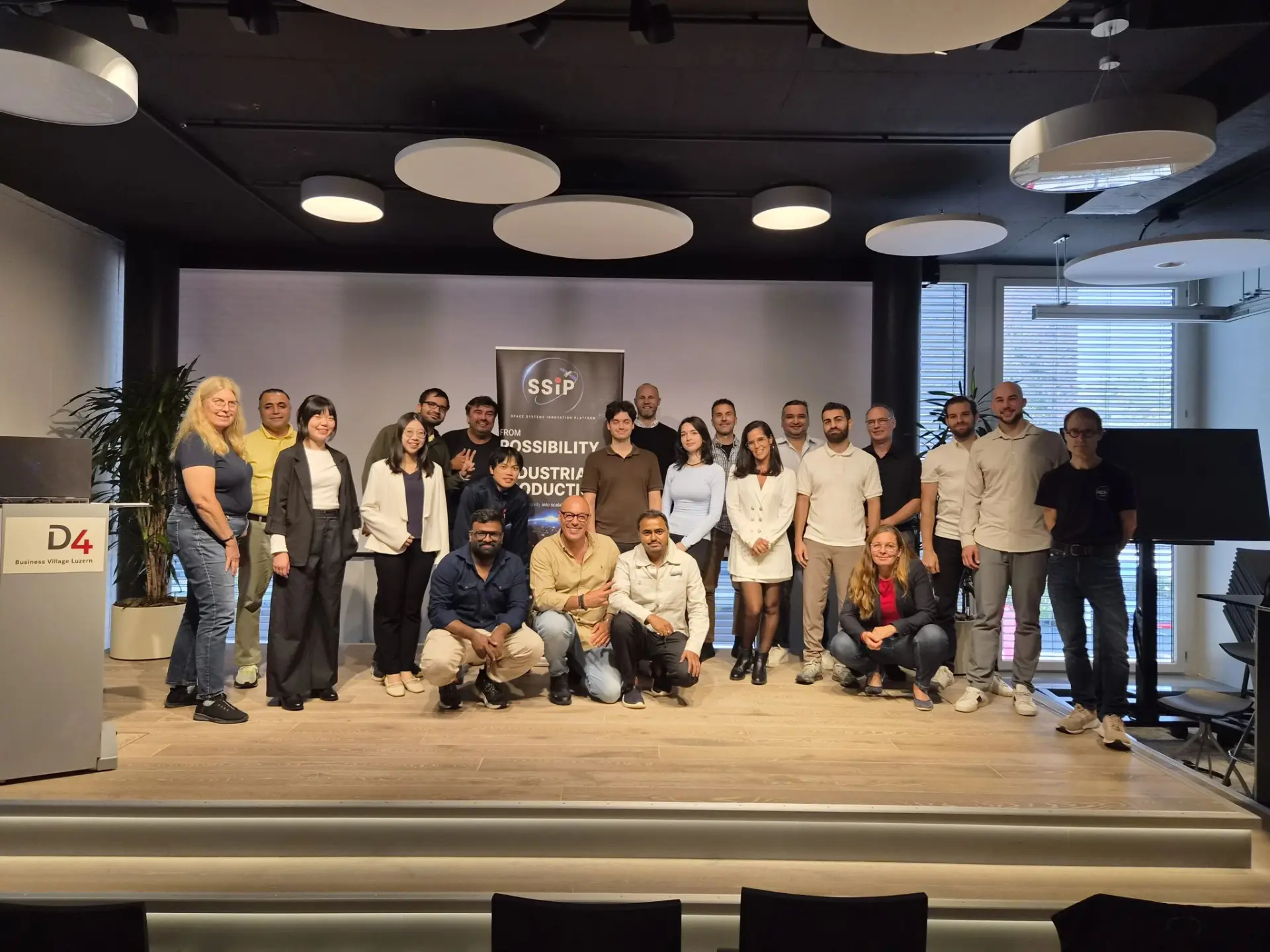
Over three days in Lucerne, engineers, researchers, developers and innovators from seven countries worked to narrow that gap.
Held from 2 to 4 October at Technopark Luzern, the Swiss Hackathon 2026 — Orbital Infrastructure Challenge brought together participants from Taiwan, the United Kingdom, India, Sweden, Italy, Spain and Switzerland.
Organised by the Space Systems Innovation Platform (SSIP), together with Technopark Luzern and Lucerne University of Applied Sciences and Arts (HSLU), the event brought multidisciplinary teams into direct contact with technical mentors and an international innovation community.
Five projects reached the final stage. One emerged as the winner.
Yet the most interesting outcome may be what the five finalists reveal about the changing nature of the space economy.
Their work extended well beyond spacecraft hardware, encompassing positioning and navigation security, orbital life-science laboratories, organoid research, astronaut health and environmental intelligence for the Swiss Alps.
The common thread was the application of advanced technologies to complex operational problems.
The Winning Idea: When Satellite Navigation Can No Longer Be Taken for Granted
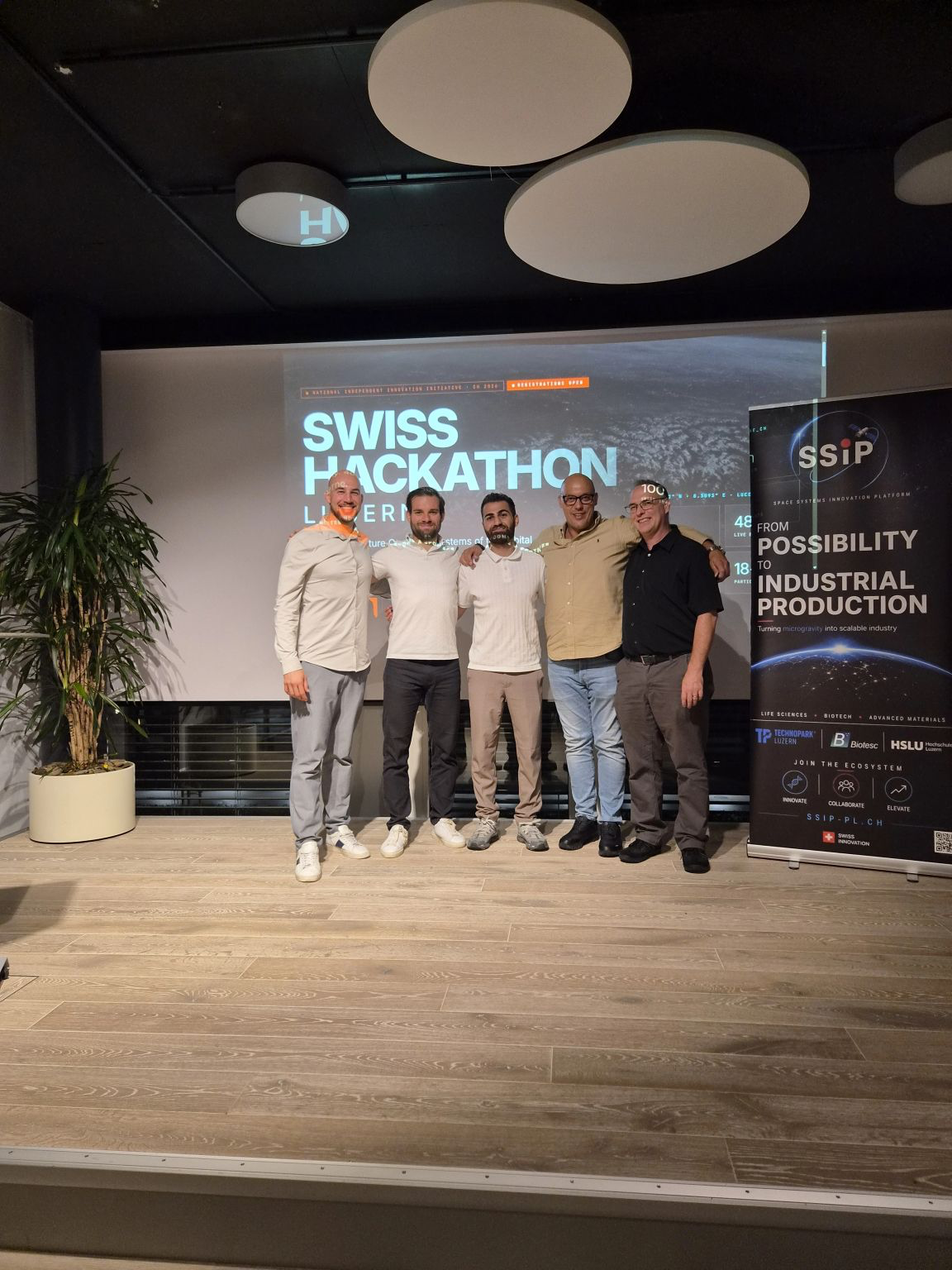
The jury selected PNT Trust Engine as the winner of Swiss Hackathon 2026.
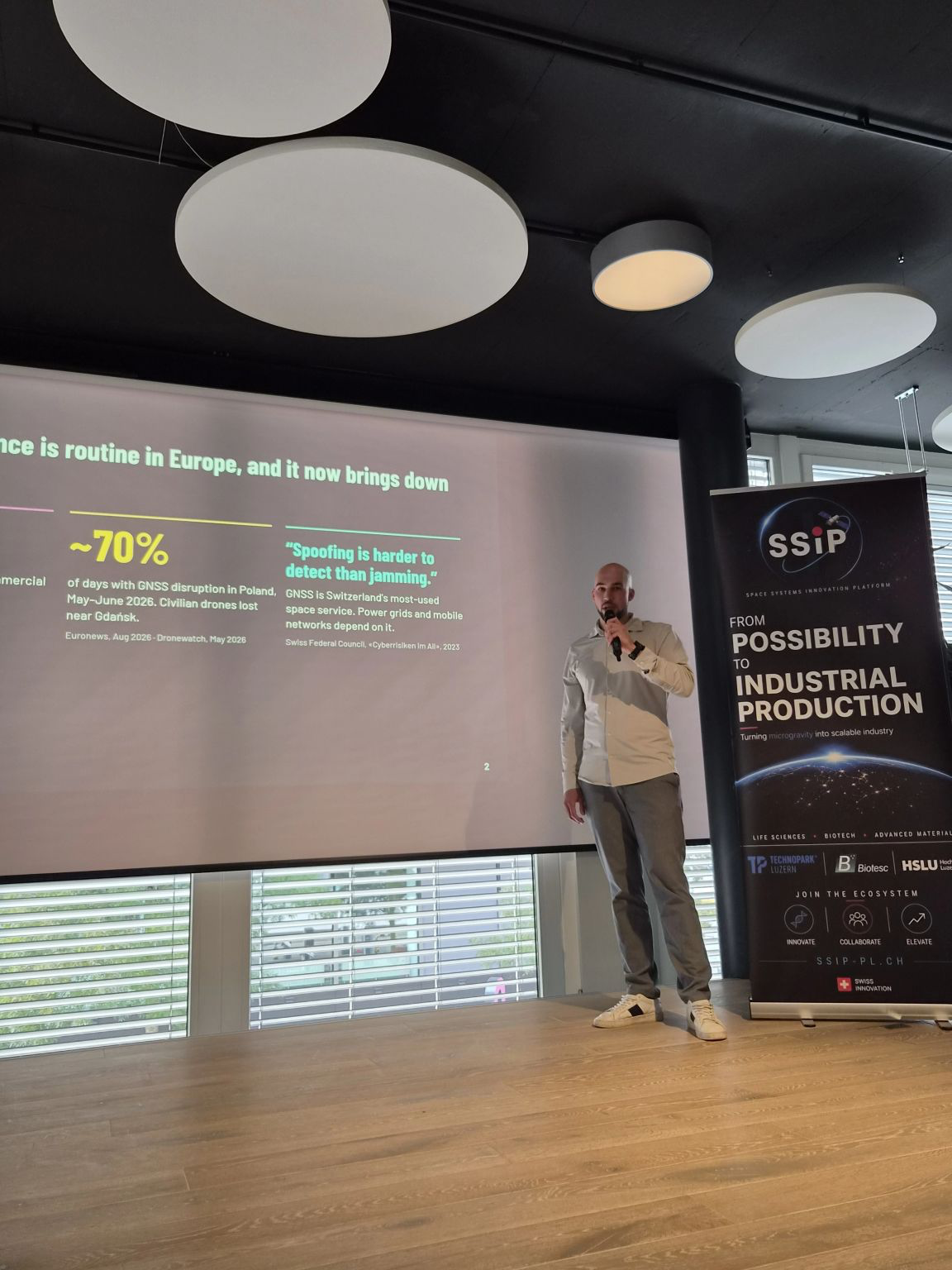
The project addresses a challenge that has become increasingly relevant across aerospace, transportation and critical infrastructure: the reliability of Positioning, Navigation and Timing (PNT) information.
Modern systems depend on satellite navigation signals for far more than determining location. Timing and positioning information support communications, infrastructure synchronisation, autonomous systems and a growing range of industrial operations.
But satellite navigation signals are vulnerable to interference and spoofing — the deliberate transmission of misleading signals intended to deceive a receiver.
PNT Trust Engine proposes a resilience-focused approach, cross-checking information from multiple positioning and sensor sources to identify inconsistencies that could indicate interference or manipulation.
The objective is not simply to produce a position estimate, but to improve confidence in whether that information can be trusted.
For increasingly autonomous systems, that distinction matters.
A navigation solution is only useful when the system relying on it can assess its integrity.
The hackathon result represents recognition of the team's proposed technical approach, not proof that the system has completed operational qualification or independent field validation.
Nevertheless, the problem it addresses is substantial, and its potential applications extend beyond the traditional space sector.
Five Finalists, Five Different Directions for Space Technology
The remaining finalists demonstrated how broadly the definition of space innovation is expanding.
Sentinel — Modular Laboratories for Orbital Research
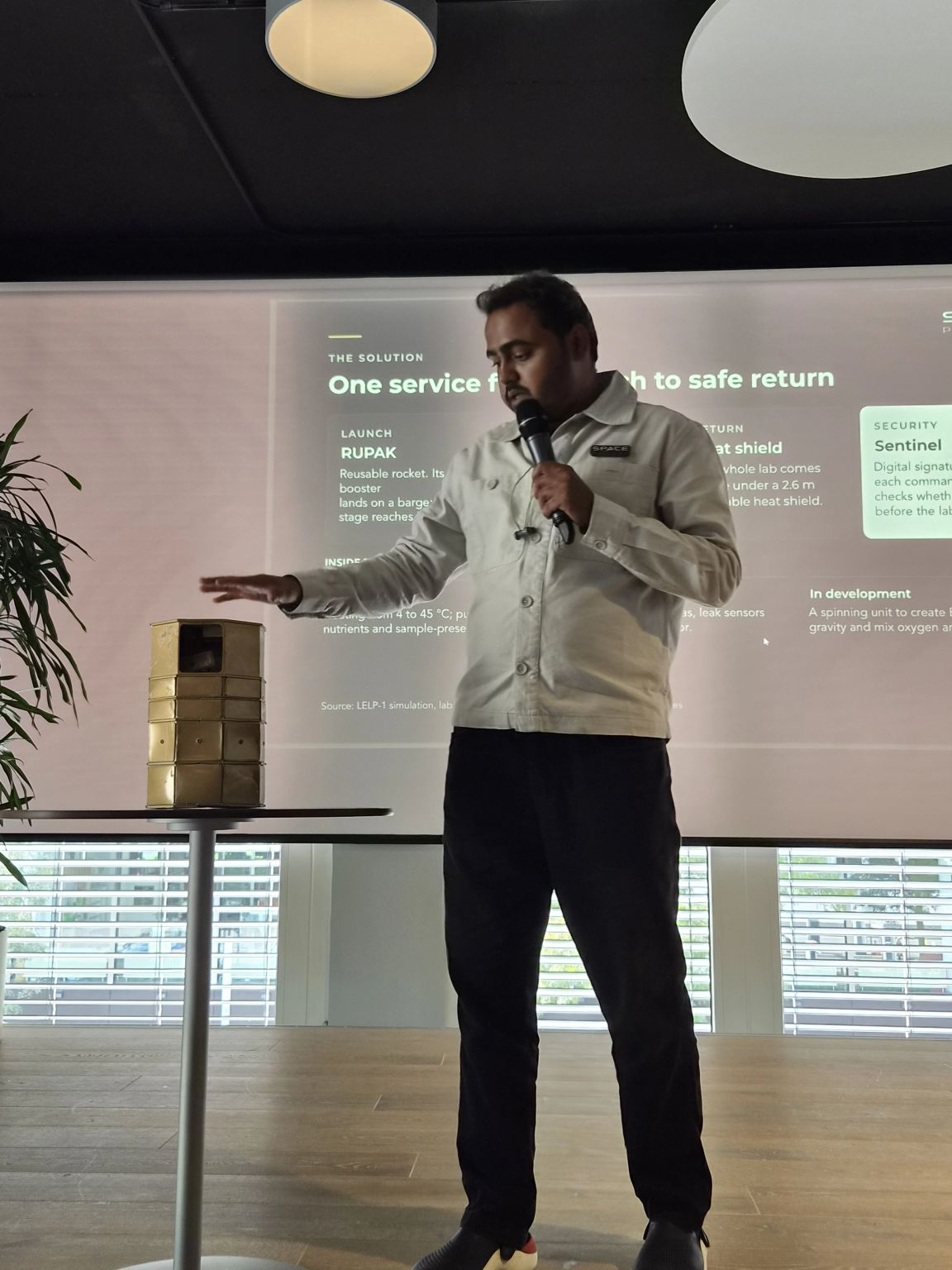
Sentinel presented a modular orbital laboratory concept designed to make biological and scientific experimentation in space more scalable and accessible.
As commercial orbital infrastructure develops, the ability to integrate experimental capabilities into flexible, repeatable platforms may become increasingly important.
The challenge is not only getting scientific hardware into orbit. It is designing systems that can support meaningful experiments while meeting requirements for integration, operation and reliability.
Sentinel explored that broader laboratory architecture.
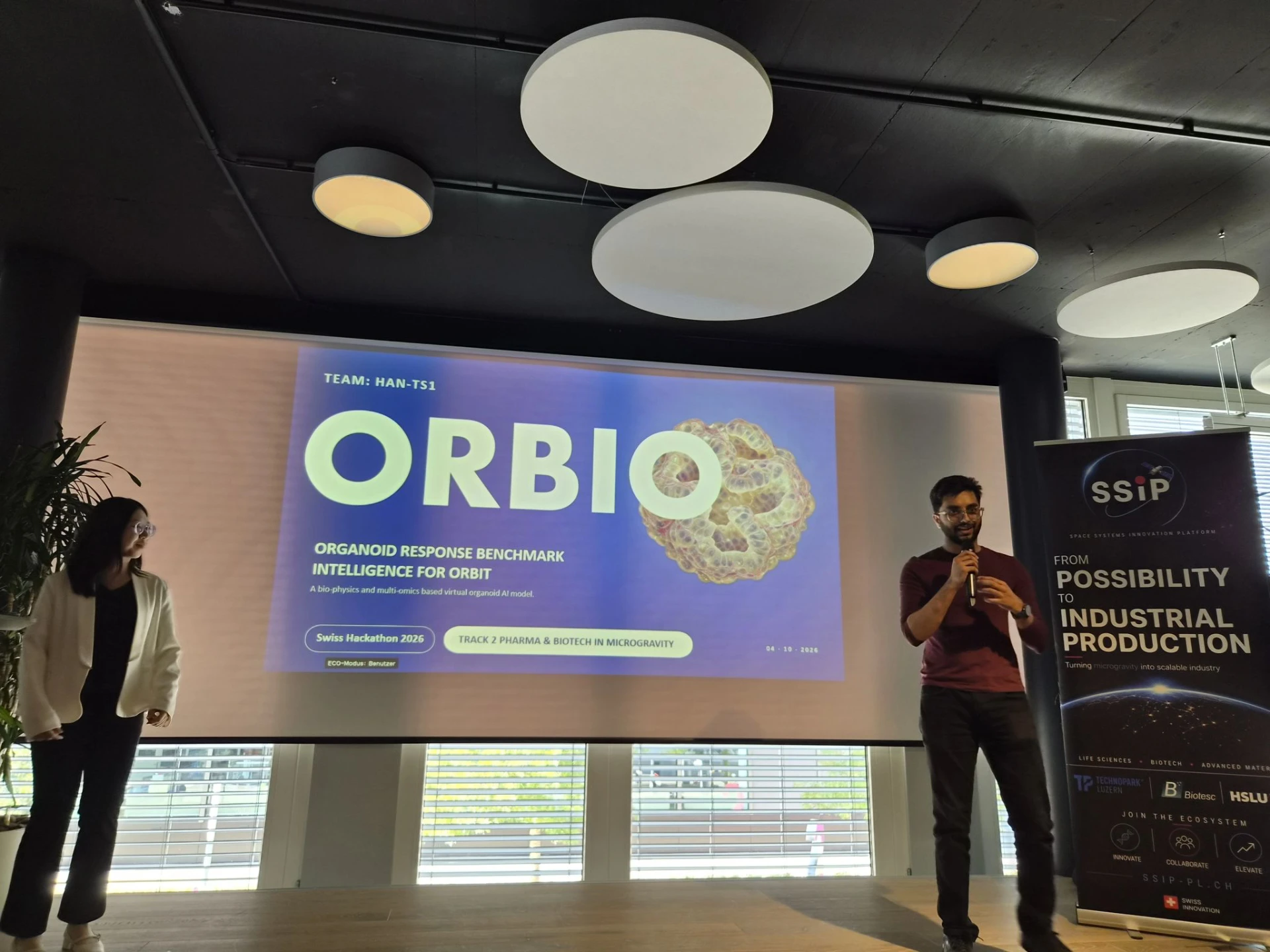
ORBIO — Intelligence for Organoid Research in Microgravity
ORBIO focused on the intersection of space biotechnology, biophysics and data analysis.
The concept proposes an organoid response intelligence platform combining biophysical modelling and multi-omics approaches to support the design and interpretation of microgravity experiments.
Organoids offer researchers models of selected biological structures and functions, creating opportunities to investigate how biological systems respond to changing experimental conditions.
For microgravity research, the value of such a platform would depend on its ability to support reproducible, scientifically meaningful analysis.
ORBIO highlighted the growing importance of connecting biological experimentation with sophisticated computational methods.
Space Patrol — Biochemical Information for Deep-Space Missions
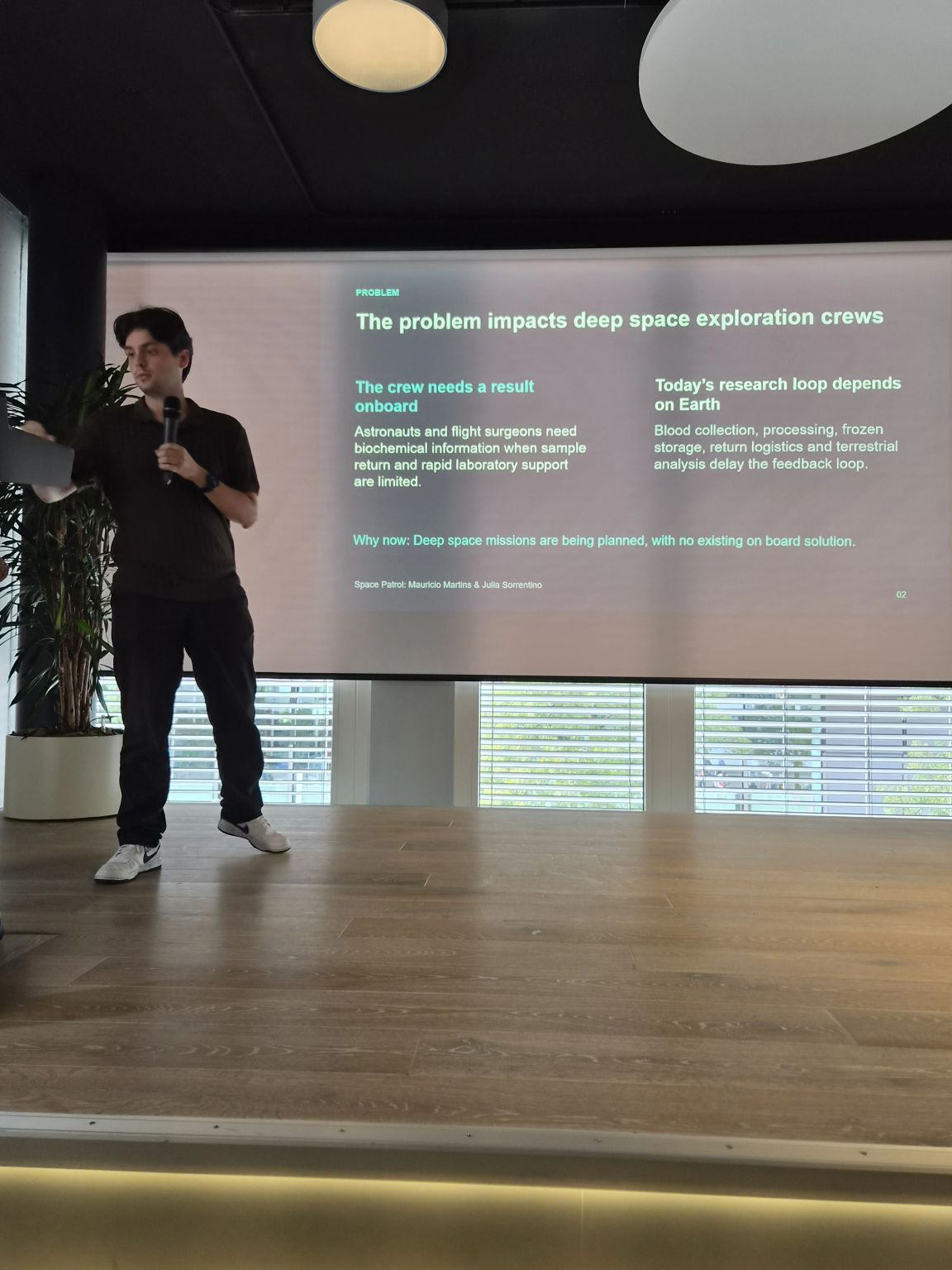
Space Patrol explored a future challenge in human spaceflight: how astronauts and flight surgeons could access relevant biochemical information during long-duration missions.
As missions move farther from Earth, operational constraints make timely medical assessment and onboard analytical capabilities increasingly important.
The team's concept investigated how biochemical information could be made available directly onboard spacecraft, potentially supporting medical decision-making in environments where conventional terrestrial laboratory access is unavailable.
The project remained at the concept-development stage, but addressed a recognised challenge for future exploration missions.
Swisstainability — BASINSCOPE ALPS
The fifth finalist brought the space economy back to Earth.
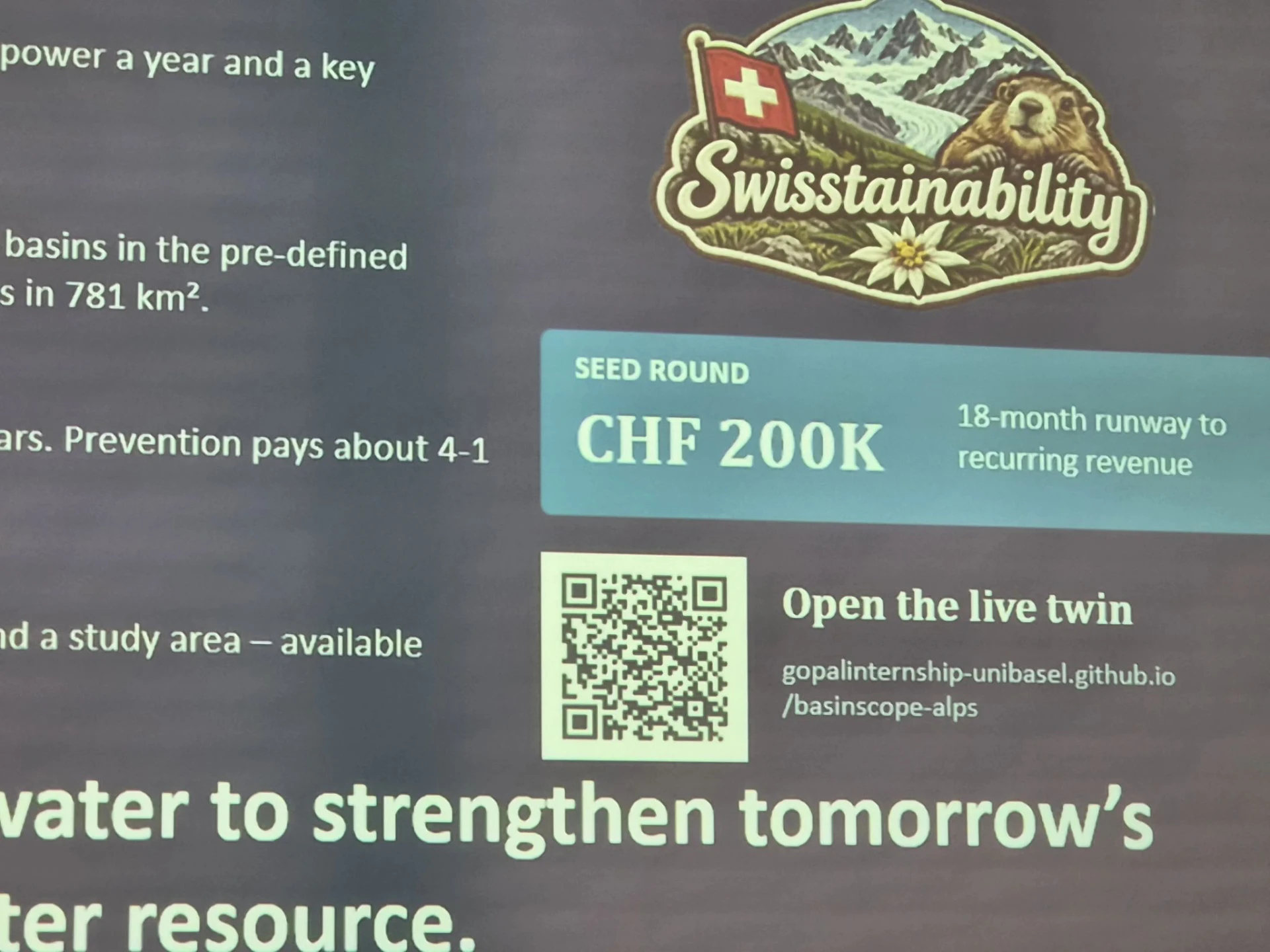
BASINSCOPE ALPS presented a decision-support concept combining satellite observations, terrain information, climate data and socio-economic indicators to support Alpine water management and hydropower resilience.
Switzerland's mountain regions are exposed to changing climatic conditions that affect water availability, infrastructure planning and environmental risk.
Integrating different information sources may help decision-makers better understand these interconnected challenges.
The project demonstrated that space-enabled innovation is not limited to activities occurring in orbit.
Satellite-derived data can also contribute to the management of critical terrestrial infrastructure.
Why the Range of Projects Matters
The five finalists reflected a broader transformation in the economics and applications of space technology.
Traditional distinctions between aerospace engineering, life sciences, digital infrastructure and industrial systems are becoming less useful when addressing complex technological challenges.
A satellite navigation resilience project may have applications in autonomous mobility.
An orbital laboratory concept depends on biotechnology, mechanical engineering, automation and reliable operational infrastructure.
Space biology increasingly intersects with data science and computational modelling.
Earth observation supports decisions in sectors far removed from spacecraft manufacturing.
These connections were central to the Swiss Hackathon format.
The event was structured around six challenge areas: orbital digital twins, pharmaceutical and biotechnology applications in microgravity, autonomous space operations, orbital manufacturing and advanced materials, cybersecurity and resilience, and Digital Twin Earth.
Rather than treating each discipline as an isolated field, the event encouraged participants to work across technical boundaries.
For Switzerland, whose industrial strengths extend across precision engineering, advanced manufacturing, biotechnology and digital systems, such interdisciplinary collaboration presents opportunities to connect established capabilities with emerging markets.
But interdisciplinary potential alone does not guarantee commercial outcomes.
That requires the next stage.
The Real Test Begins After the Final Presentation
Hackathons can produce impressive demonstrations under intense time pressure.
They do not automatically produce deployable technologies.
Between an early prototype and a viable industrial solution lie requirements analysis, technical verification, validation, financing, intellectual property arrangements, operational integration and, where relevant, regulatory assessment.
A successful presentation demonstrates promise. It does not remove those requirements.
Swiss Hackathon 2026 was designed with this distinction in mind.
Its programme framework envisages the possibility of continued mentoring, feasibility assessment and pilot exploration for selected projects, subject to partner interest, technical viability and separate agreements.
For SSIP, the relevance of this approach lies in its institutional model.
As an independent Swiss non-profit association, SSIP connects research organisations, industry and international technology partners around applied innovation opportunities.
Its role is not to claim ownership of the teams' technologies or guarantee their commercial success.
It is to help create conditions in which promising projects can be evaluated by organisations with complementary capabilities and a practical interest in their development.
Following the event, SSIP invited organisations interested in the finalists' work to engage with the teams and explore potential collaboration.
Whether any of the projects progresses towards an industrial pilot will depend on the technical evidence, the commitment of potential partners and the resources available.
That distinction is important. It makes the difference between celebrating an idea and building a credible development pathway around it.
International Talent Meets Swiss Industrial Capability
The presence of participants from seven countries reinforced the international character of the initiative.
The event also coincided with the opening of World Space Week 2026, the United Nations-recognised annual celebration held from 4 to 10 October.
World Space Week's 2026 theme, Rocket Revolution, reflected changes in access to space and the growing participation of commercial companies, research institutions and emerging space actors.
In Lucerne, the focus extended beyond launch systems to the technologies, services and industrial capabilities that could make increasing access to space economically and scientifically useful.
The event drew support from technical mentors and specialists, including Madhur Agrawal, Daniel Lipp, Yvonne Bemelmans, Rylan Coury and Debraj Dasgupta, with Dr. Bernd Rattenbacher contributing to the judging process.
The organising team also acknowledged the work of Technopark Luzern, HSLU, its partners and the people responsible for supporting the participants throughout the event.
The value of that network extends beyond the competition itself.
It brings together people who may otherwise work in different disciplines, institutions or countries, creating opportunities for technical exchange and future collaboration.
From a Weekend in Lucerne to the Next Industrial Challenge
Swiss Hackathon 2026 concluded with five finalist concepts addressing distinctly different technical problems.
PNT Trust Engine received the winning award, while Sentinel, ORBIO, Space Patrol and BASINSCOPE ALPS demonstrated the diversity of challenges being explored by emerging talent.
None of these projects should be mistaken for a commercially qualified solution solely because it reached the final.
That is precisely why the next stage matters.
The opportunity now lies in determining which ideas can withstand deeper technical scrutiny, which require further research and which may attract partners willing to support structured development.
For SSIP, the event illustrated what can happen when international talent, Swiss industrial capabilities and academic expertise are brought together around defined challenges.
The broader lesson is relevant far beyond the space sector.
Innovation events create value not simply by generating ideas, but by helping the right organisations determine which ideas deserve to be developed further.
The competition ended in Lucerne on 4 October. The more important question is which of its technologies will still be advancing when the next Swiss Hackathon begins.
Sources & context
Reporting based on SSIP’s supplied event account and photographs. Project descriptions reflect the teams’ hackathon concepts, not independently qualified commercial systems.
About SSIP
SSIP® is an independent Swiss non-profit association headquartered at Technopark Luzern, connecting industry, research institutions and international partners to structure applied innovation initiatives.
Explore collaboration with the finalist teamsWas this article useful?
Your feedback helps us improve SSIP Insights.
Share it with your network.