The global space industry has spent decades solving the problem of reaching orbit. Its next challenge may be just as demanding: building the industrial relationships needed to make space commercially useful.
India and Switzerland approach that challenge from very different positions.
India has developed an increasingly ambitious private space sector, supported by an established national space programme, a substantial engineering workforce and a growing network of specialised technology companies.
Switzerland brings another set of strengths: precision manufacturing, advanced materials, pharmaceutical research, industrial automation and highly specialised engineering capabilities.
Neither ecosystem possesses every capability required to build the next generation of space infrastructure.
Together, they may offer something considerably more valuable.
That was the premise behind the Swiss–India Space & Deep-Tech Mission organised by the Space Systems Innovation Platform (SSIP), Lucerne University of Applied Sciences and Arts (HSLU) and Inventicia from 6 to 12 September 2026.
The initiative brought together industrial, scientific and commercial perspectives to explore opportunities across India's rapidly evolving space economy.
Its central ambition was straightforward: move international cooperation beyond introductions and towards technically credible, commercially relevant projects.
Bengaluru: Where a New Industrial Space Economy Is Taking Shape
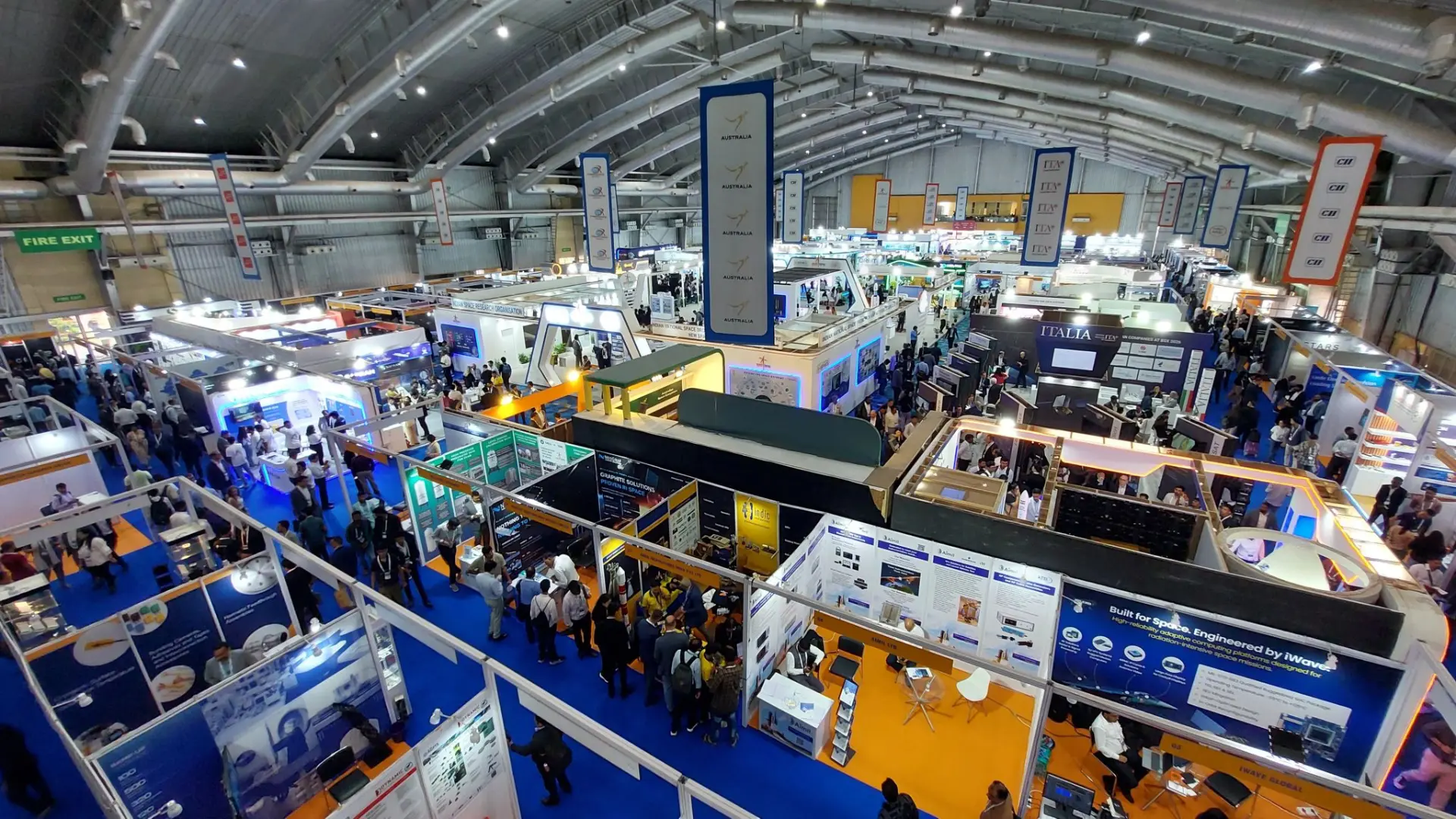
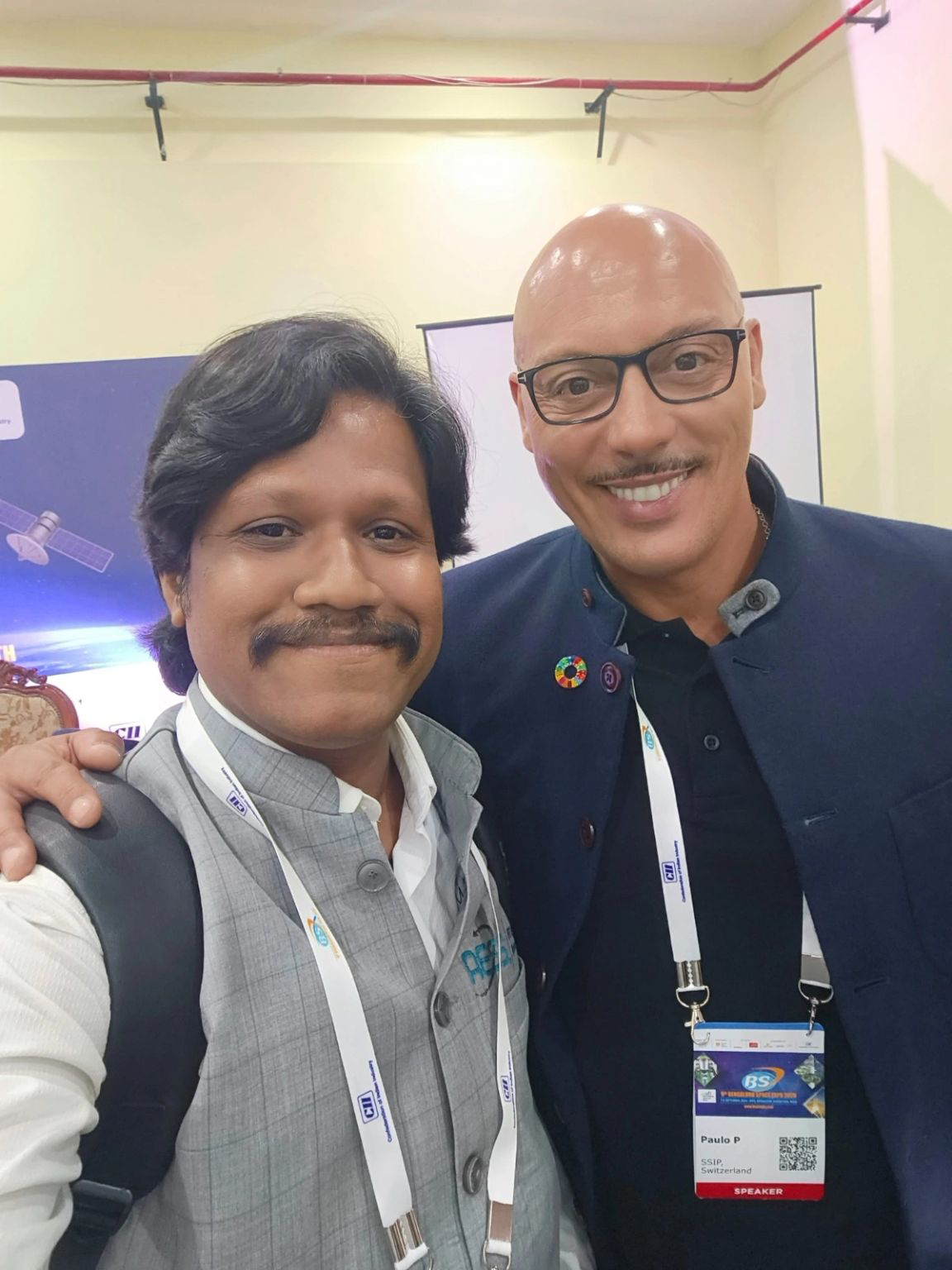
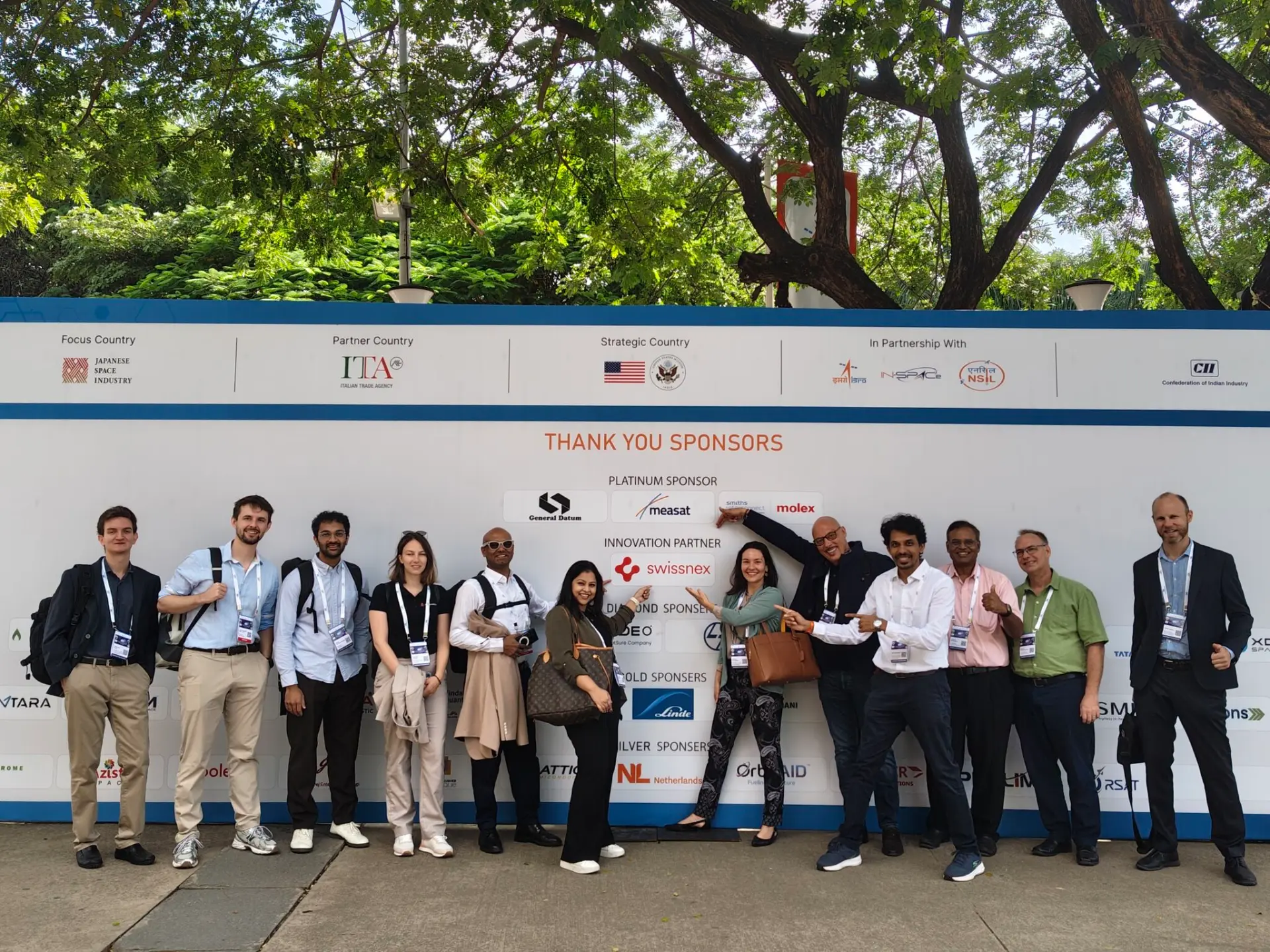
The mission coincided with the ninth Bengaluru Space Expo (BSX 2026), held from 7 to 9 September at the Bangalore International Exhibition Centre.
The event brought together established aerospace companies, emerging space enterprises, research organisations, technology suppliers and international industry representatives.
For SSIP, the exhibition provided access to a rapidly expanding network of companies developing technologies across the space value chain.
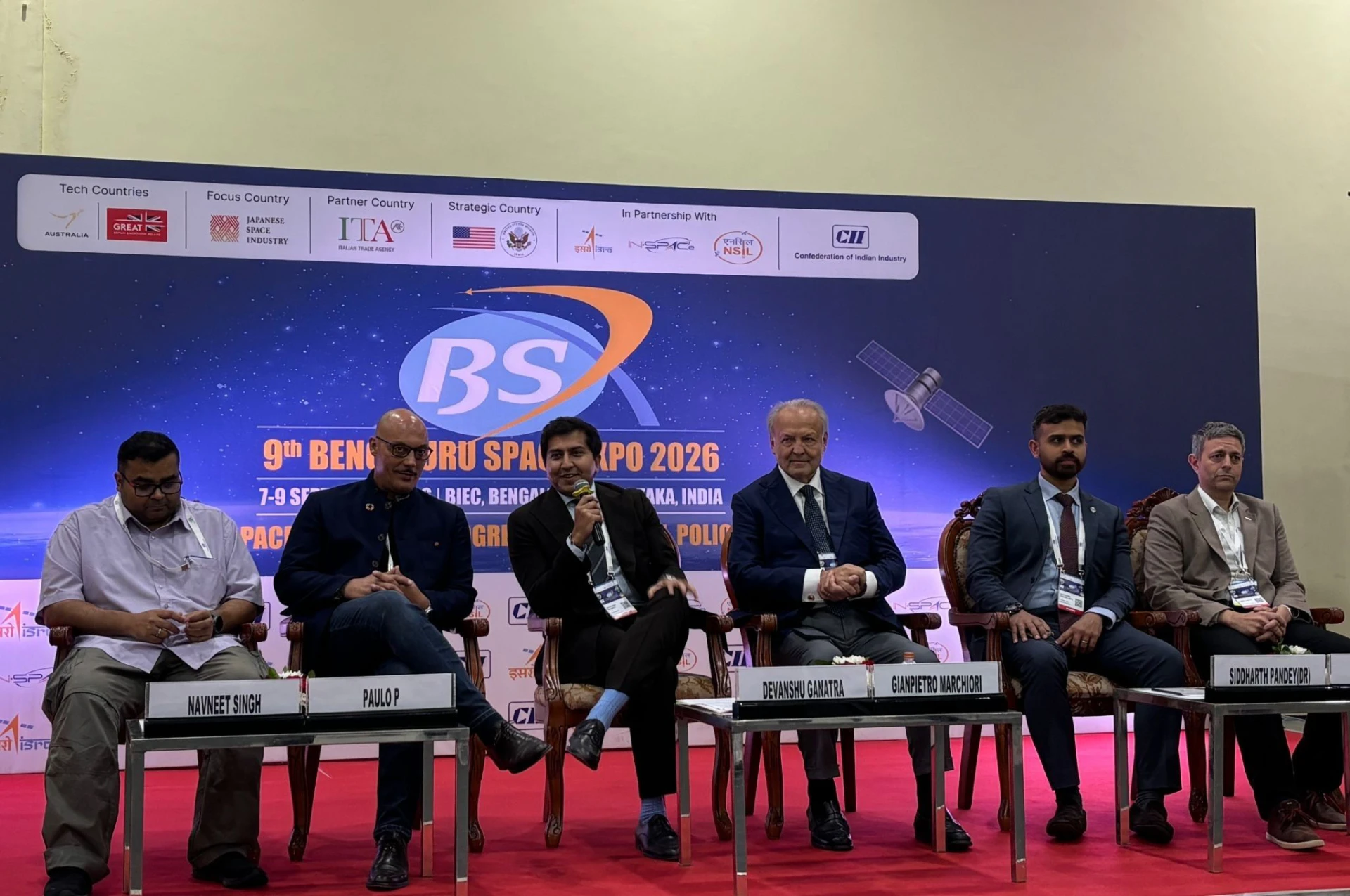
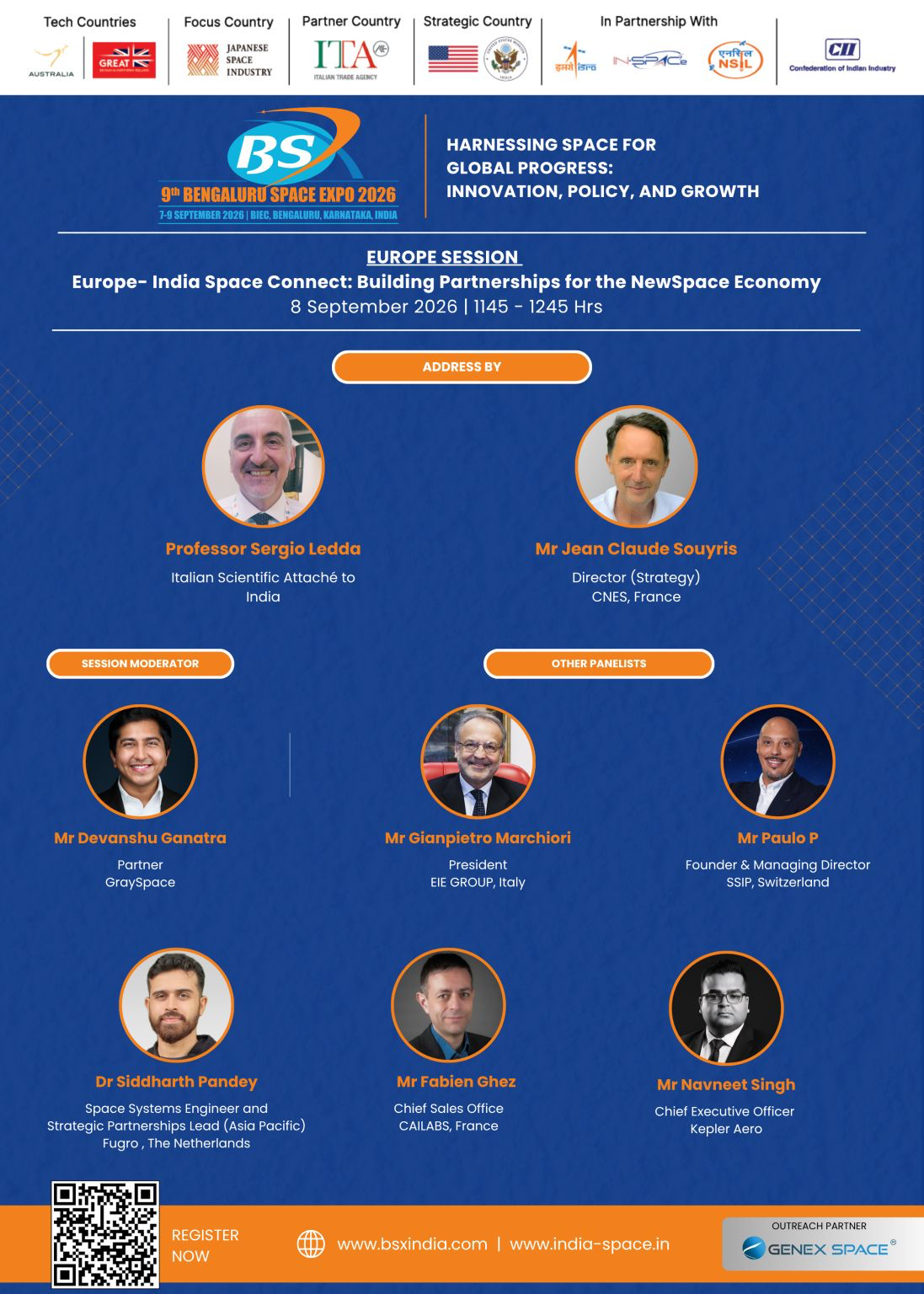
On 8 September, Paulo Pinheiro, Founder and Managing Director of SSIP, participated in the session Europe–India Space Connect: Building Partnerships for the NewSpace Economy.
The discussion addressed one of the central questions facing international space cooperation: how can research capabilities, advanced technologies, manufacturing capacity and commercial opportunities be connected across borders?
For European organisations, India's space industry presents opportunities extending beyond access to a growing market.
Indian companies are developing capabilities in satellite manufacturing, spacecraft subsystems, mission integration, space transportation, digital applications and emerging orbital services.
For Indian organisations, collaboration with Switzerland offers potential access to specialised technologies and research capabilities in areas where precision, scientific validation and technical reliability are particularly important.
But connecting those strengths requires more than recognising their complementarity.
It requires identifying actual technical requirements, matching qualified partners and establishing workable development and commercial arrangements.
Beyond the Exhibition Floor
The SSIP mission was deliberately multidisciplinary.
Paulo Pinheiro contributed experience in aerospace engineering, industrial development and international collaboration.
Dr. Bernd Rattenbacher, representing HSLU/BIOTESC and serving as an SSIP Board Advisor, brought expertise in space biology and microgravity research.
Rylan Coury contributed experience relevant to integrating life-science requirements with space infrastructure and mission opportunities.
Debraj Dasgupta, Founder of Inventicia, brought extensive pharmaceutical industry experience and established India–Switzerland business relationships.
Together, the team represented an intersection that is becoming increasingly important to the commercial space economy: scientific research, enabling technology, industrial capability and market development.
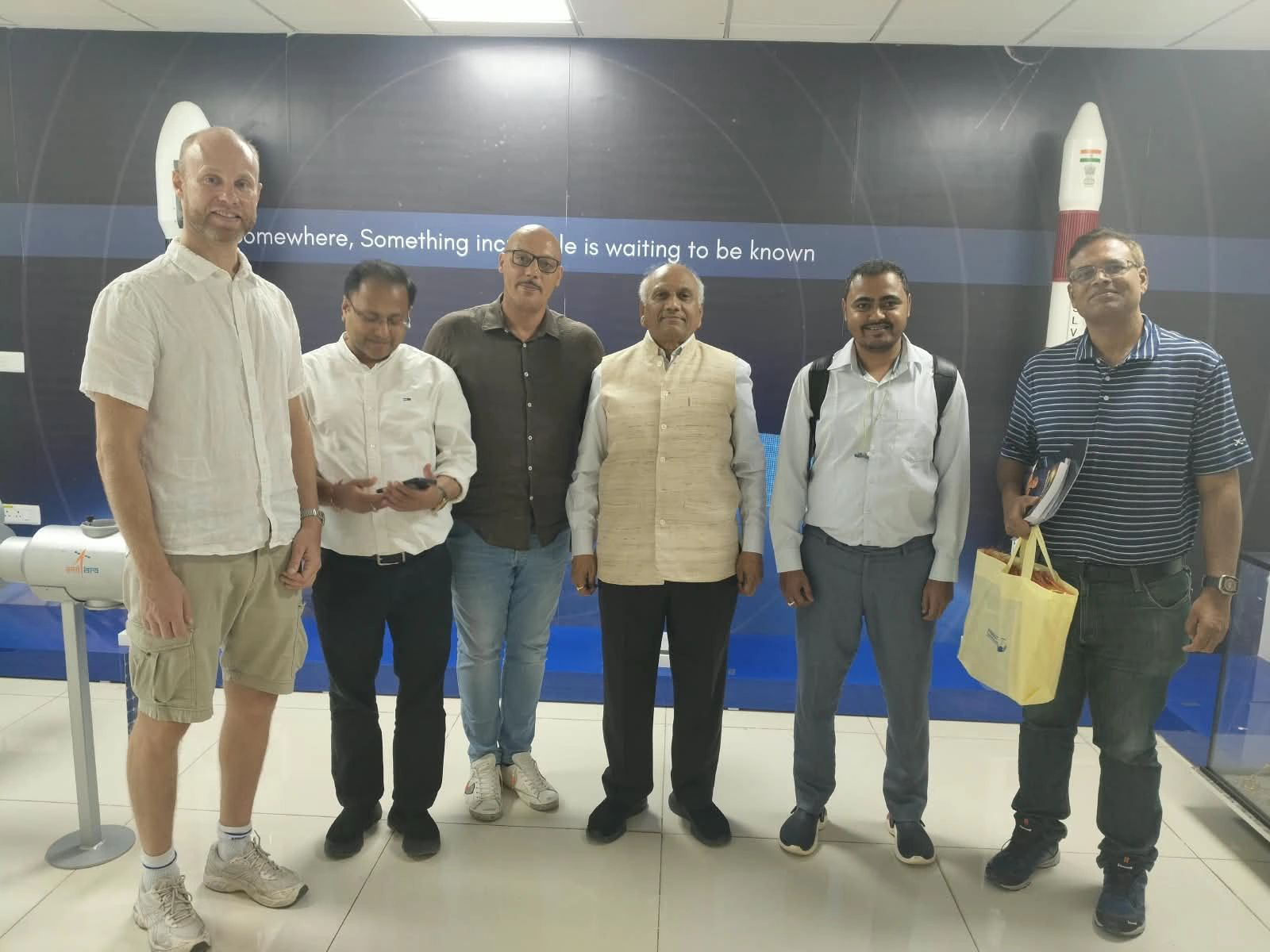
During the mission, SSIP engaged with organisations including SIA-India, CoE SpaceTech Foundation, AkashaLabdhi, Inbound Aerospace, Space Philic and Ananth Technologies.
The discussions addressed potential collaboration in microgravity and life sciences, orbital infrastructure, launch and re-entry capabilities, advanced manufacturing, testing, technology validation and commercial market access.
These engagements built upon relationships that SSIP had already been developing with Indian organisations.
Earlier in 2026, SSIP had established a cooperation framework with SIA-India and the CoE SpaceTech Foundation, providing an institutional foundation for continued interaction between the two ecosystems.
The September mission offered an opportunity to advance those relationships through direct discussions with companies and technical specialists.
The challenge now is determining which opportunities can progress towards defined work programmes, feasibility studies and industrial collaborations.
Microgravity: A Meeting Point Between Space and Biotechnology
Among the areas explored, microgravity-enabled life sciences illustrates the potential value of connecting the two countries.
Switzerland is home to one of the world's most sophisticated pharmaceutical and biotechnology ecosystems.
India combines extensive pharmaceutical manufacturing experience with growing space infrastructure and engineering capabilities.
These strengths could support future cooperation in experimental hardware, biological research, payload integration and access to different space-based research environments.
Microgravity offers researchers the possibility of investigating physical and biological processes under conditions that differ from those available on Earth.
Potential research areas include protein crystallisation, cellular responses and other gravity-sensitive processes.
However, scientific interest does not automatically establish commercial value.
For pharmaceutical companies, experimental programmes must address defined development questions and produce reproducible, interpretable evidence.
For space technology companies, payload systems must satisfy requirements for reliability, integration, environmental control, sample management and mission operations.
Connecting the two industries therefore requires considerable work before a payload reaches orbit.
It is precisely this intersection of scientific requirements and engineering implementation that makes cross-border collaboration potentially valuable.
HSLU/BIOTESC contributes relevant scientific expertise, while the Indian space ecosystem offers a growing range of technological capabilities and potential implementation partners.
SSIP's role is to help structure the relationships needed to explore those opportunities.
The Industrial Opportunity Is Bigger Than Spacecraft
The commercial significance of India–Switzerland cooperation extends well beyond launch vehicles and satellites.
Advanced manufacturing, precision components, robotics, semiconductors, photonics, sensing systems and specialised materials are all relevant to increasingly complex space infrastructure.
A spacecraft is not produced by a single technology provider. It depends on multiple industrial layers, from component suppliers to system integrators, verification facilities and specialised service providers.
The challenge becomes even more complex when projects require companies in different countries to work within a shared technical and commercial framework.
India offers significant engineering and manufacturing capabilities.
Switzerland contributes established expertise in high-value industrial technologies and specialised research.
Connecting those capabilities creates opportunities for joint development, industrial supply-chain cooperation and access to new markets.
Yet successful cross-border supply chains depend on qualification, traceability, delivery performance, export-control compliance, technical standards and clear contractual arrangements.
The economic opportunity is therefore not simply to introduce companies to one another.
It is to build dependable industrial relationships capable of supporting demanding aerospace and deep-tech programmes.
International Cooperation Needs an Execution Model
The difficulty with international innovation initiatives is that their immediate outputs are relatively easy to communicate.
A conference appearance can be photographed.
A meeting can be announced.
A memorandum of understanding can be signed.
But none of these achievements, taken individually, demonstrates that a technically and commercially sustainable project has been created.
That requires further steps.
A promising discussion must be translated into a defined requirement.
Suitable organisations must agree on responsibilities, resources and technical contributions.
Intellectual property, financing, project governance and applicable regulatory requirements must be addressed.
For research-intensive initiatives, experimental objectives and success criteria must be established before significant resources are committed.
Only then can a collaboration move from strategic interest towards a credible development programme.
This distinction is central to SSIP's operating model.
The independent Swiss non-profit association works to connect industrial and research organisations, structure collaborative initiatives and support the transition from opportunity identification to technical validation.
In international cooperation, that role can help reduce the distance between companies that possess complementary capabilities but operate in different technological and institutional environments.
The September mission strengthened relationships and identified areas for further work. The progression of individual opportunities towards funded projects, validated technologies or commercial agreements will depend on subsequent technical assessment and partner commitments.
The Role of Trust in a Technology-Driven Industry
One of the most important aspects of cross-border industrial development is also one of the least visible.
Trust.
Aerospace companies must share technical requirements, establish compatible working methods and make commitments that may extend across several years.
Research organisations need confidence that experimental objectives will be respected and that results can be assessed independently.
Commercial partners must understand how risks, costs, intellectual property and future value will be allocated.
Those conditions rarely emerge from a single meeting.
They develop through repeated engagement, technical credibility and an understanding of how organisations operate.
The relationships established between the Swiss and Indian participants therefore represent an important foundation, even where the next commercial or scientific steps remain under development.
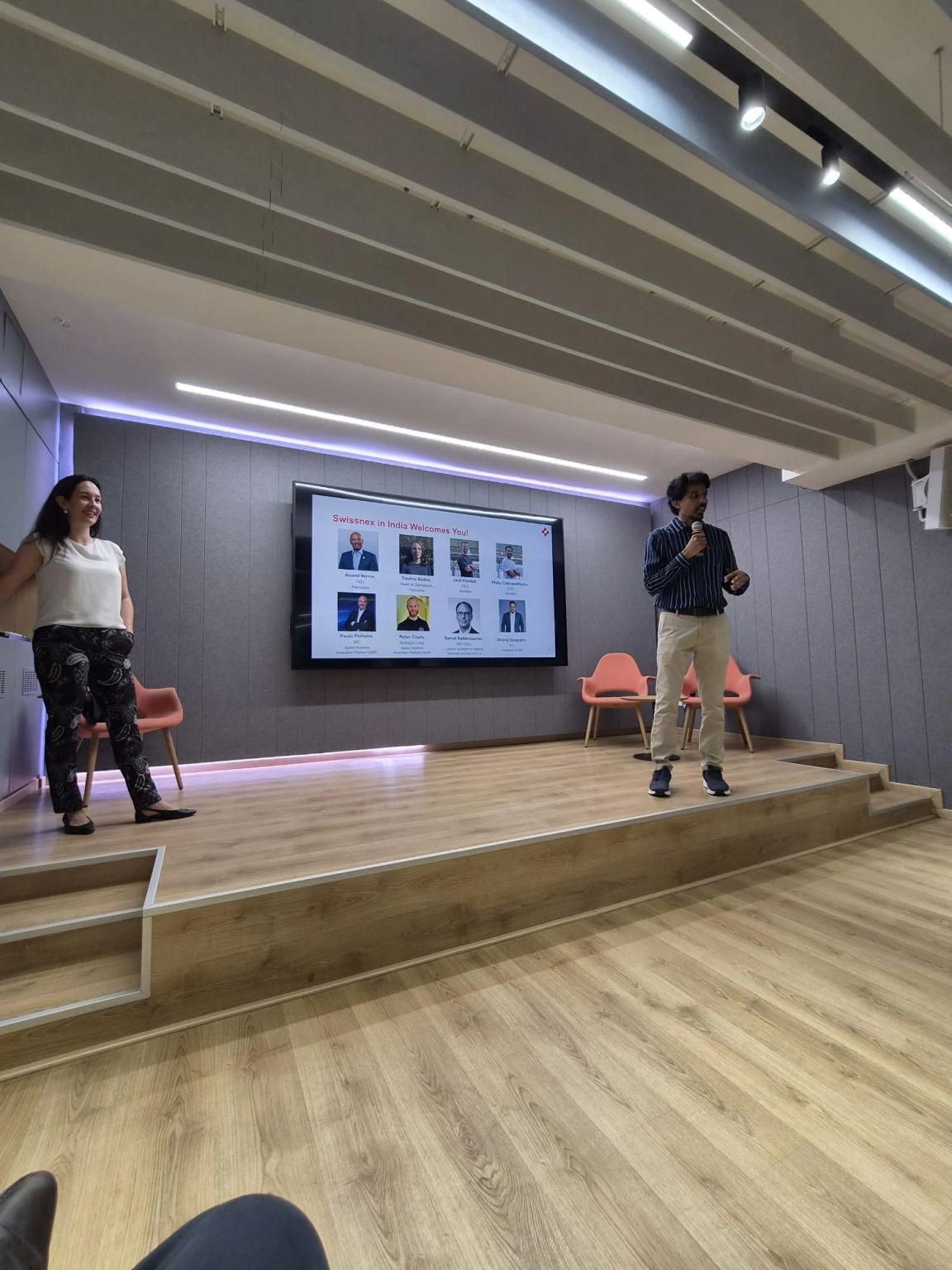
Swissnex in India and the Swiss Business Hub India contributed to the broader environment for cross-border innovation engagement, while SSIP's own mission remained an independently organised initiative without a governmental mandate.
That institutional distinction matters.
The purpose was not to speak on behalf of Switzerland or India, but to create practical opportunities between organisations with relevant capabilities.
From International Interest to Industrial Results
The next phase of the commercial space economy will require more than increasingly capable launch systems.
It will require industrial networks that can supply, validate, integrate and operate technologies across national borders.
For India and Switzerland, the opportunity lies in combining complementary strengths without assuming that either country must replicate the other's capabilities.
The September mission demonstrated the breadth of potential cooperation, from microgravity biotechnology and research infrastructure to spacecraft technologies, specialised manufacturing and international market access.
It also highlighted the work that remains.
The measure of success will not be the number of organisations met or the visibility generated by an international exhibition.
It will be whether these relationships produce defined research activities, viable technology pilots, qualified industrial partnerships and projects capable of attracting sustained commitment.
For SSIP, that is the next challenge.
For the wider India–Switzerland space relationship, it may also be the most commercially important one.
The technology exists on both sides. The opportunity now is to build the industrial relationships that allow it to work together.
Sources & context
Reporting based on SSIP’s supplied mission account and images. Official event sources confirm the conference dates and session programme. Collaboration opportunities described here are exploratory, not announcements of funded projects or completed commercial agreements.
About SSIP
SSIP® is an independent Swiss non-profit association headquartered at Technopark Luzern, connecting industry, research institutions and international partners to structure applied innovation initiatives.
Discuss India–Switzerland collaborationWas this article useful?
Your feedback helps us improve SSIP Insights.
Share it with your network.