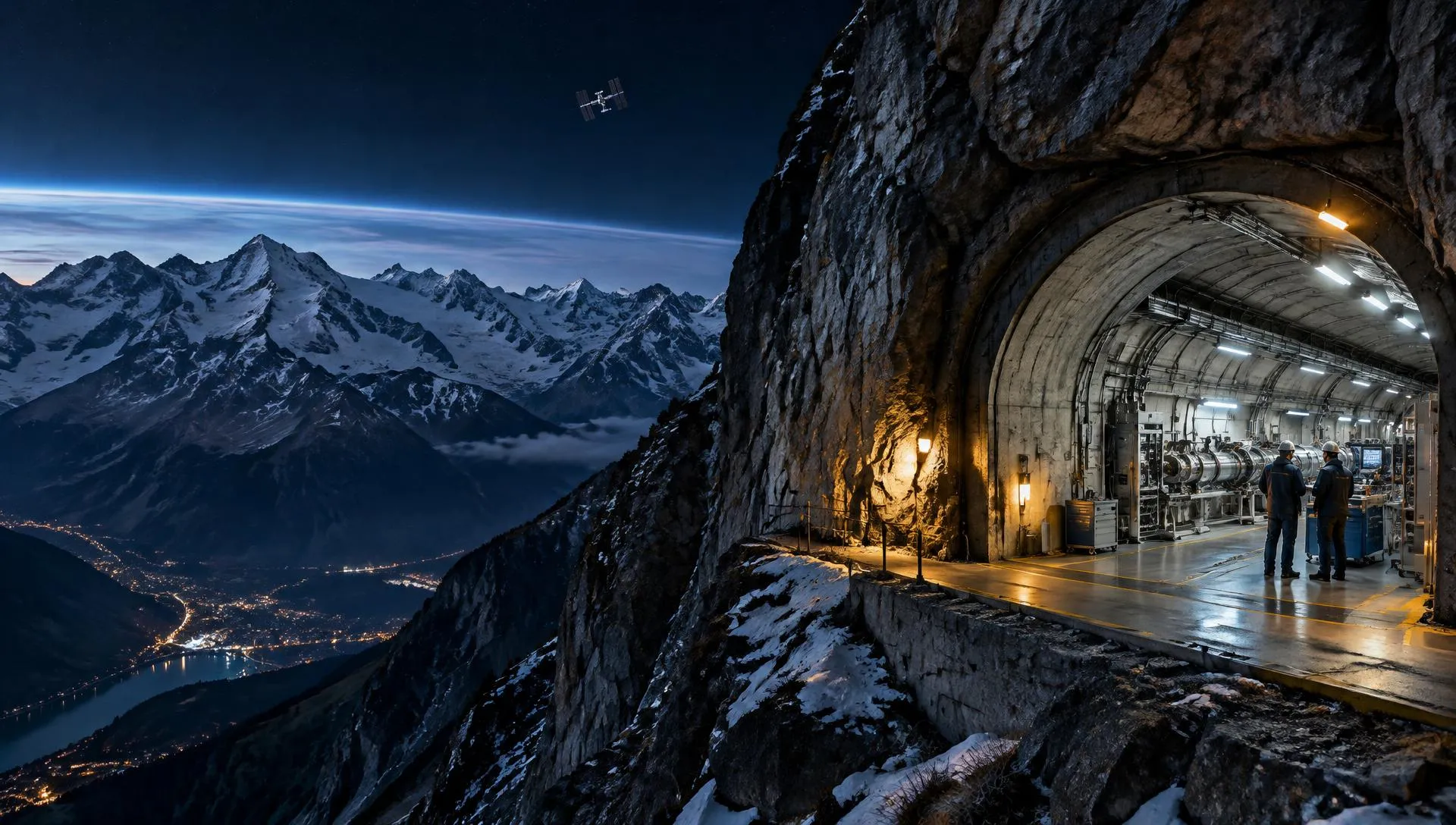
The future of Europe's space economy might have an unlikely starting point: deep inside a Swiss mountain.
At the Hagerbach Test Gallery, an extensive underground research facility in eastern Switzerland, engineers and scientists are exploring technologies for some of the most challenging environments imaginable.
Its network of tunnels, laboratories and experimental spaces offers something increasingly valuable to the space industry: an environment in which ideas can be tested against physical reality.
Next month, that expertise will travel to Bremen.
VSH – The Underground Future Lab has publicly confirmed its participation in Space Tech Expo Europe 2026 as a co-exhibitor at the Space Systems Innovation Platform (SSIP) booth.
It joins a Swiss collaboration bringing together Lucerne University of Applied Sciences and Arts (HSLU/BIOTESC), T4G Engineering and Technopark Luzern.
From 17 to 19 November, these organisations will present their complementary expertise to the European space industry at Messe Bremen.
The exhibition is not simply an opportunity to showcase five institutions.
It is an opportunity to explore a broader industrial proposition: that Europe's future competitive advantage in space may depend on its ability to connect specialised capabilities that already exist on Earth.
A Growing Industry With a Difficult Problem
Europe's space sector is undergoing a period of significant transformation.
Public investment, strategic autonomy, new commercial applications and the emergence of new industrial players are changing the landscape.
But growing ambitions do not automatically translate into industrial capability.
Before a scientific experiment reaches orbit, it must be translated into reliable hardware.
Before a new material can be adopted, its performance must be established.
Before a spacecraft component can be considered mission-ready, engineers must understand whether it can withstand the conditions it will encounter.
Between scientific discovery and commercial deployment lies an extensive network of technical requirements, specialised suppliers, validation processes and investment decisions.
This is where smaller, highly specialised European organisations can play an increasingly important role.
And it is the opportunity SSIP is seeking to address.
“But growing ambitions do not automatically translate into industrial capability.”
Five Organisations, One Industrial Proposition
Based at Technopark Luzern, SSIP is an independent Swiss non-profit association connecting research institutions, industrial companies, technology developers and international partners.
Its approach does not depend on building another vertically integrated aerospace company.
Instead, it seeks to make complementary expertise easier to identify, combine and translate into credible development projects.
The five organisations participating in Bremen illustrate that model.


HSLU/BIOTESC: Where Biology Meets Orbit
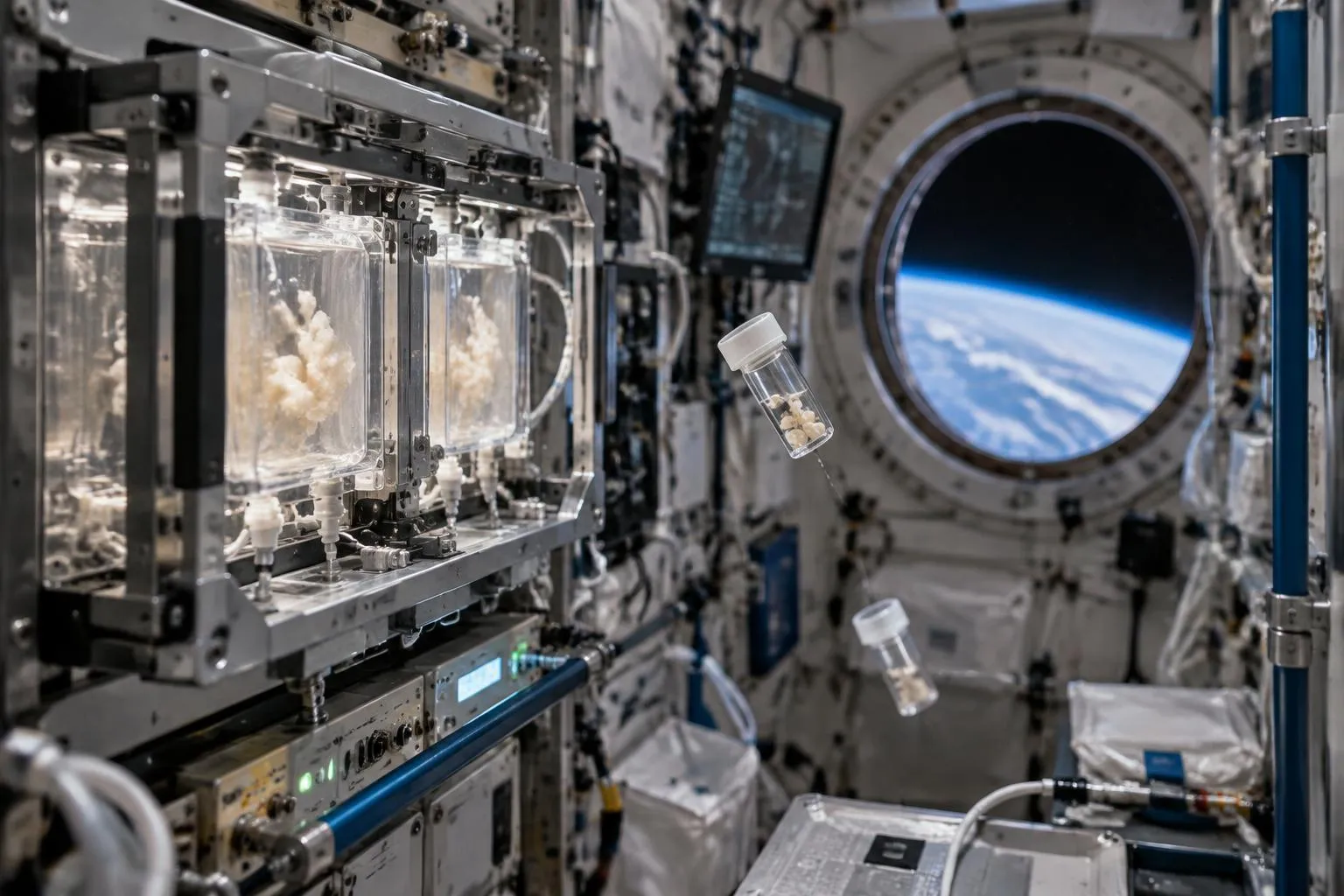
Lucerne University of Applied Sciences and Arts contributes scientific expertise through its Biotechnology Space Support Center, BIOTESC.
Working within ESA programmes, BIOTESC supports biological experiments conducted aboard the International Space Station.
Its experience encompasses experiment preparation, testing and specialised operational support.
As pharmaceutical and biotechnology companies investigate the possibilities of microgravity, translating scientific questions into executable space experiments is becoming increasingly relevant.
Space biology, however, is not simply about sending samples into orbit.
It requires an understanding of experimental conditions, biological processes, supporting hardware, operational constraints and the interpretation of results.
T4G Engineering: The Industrial Reality Behind Innovation
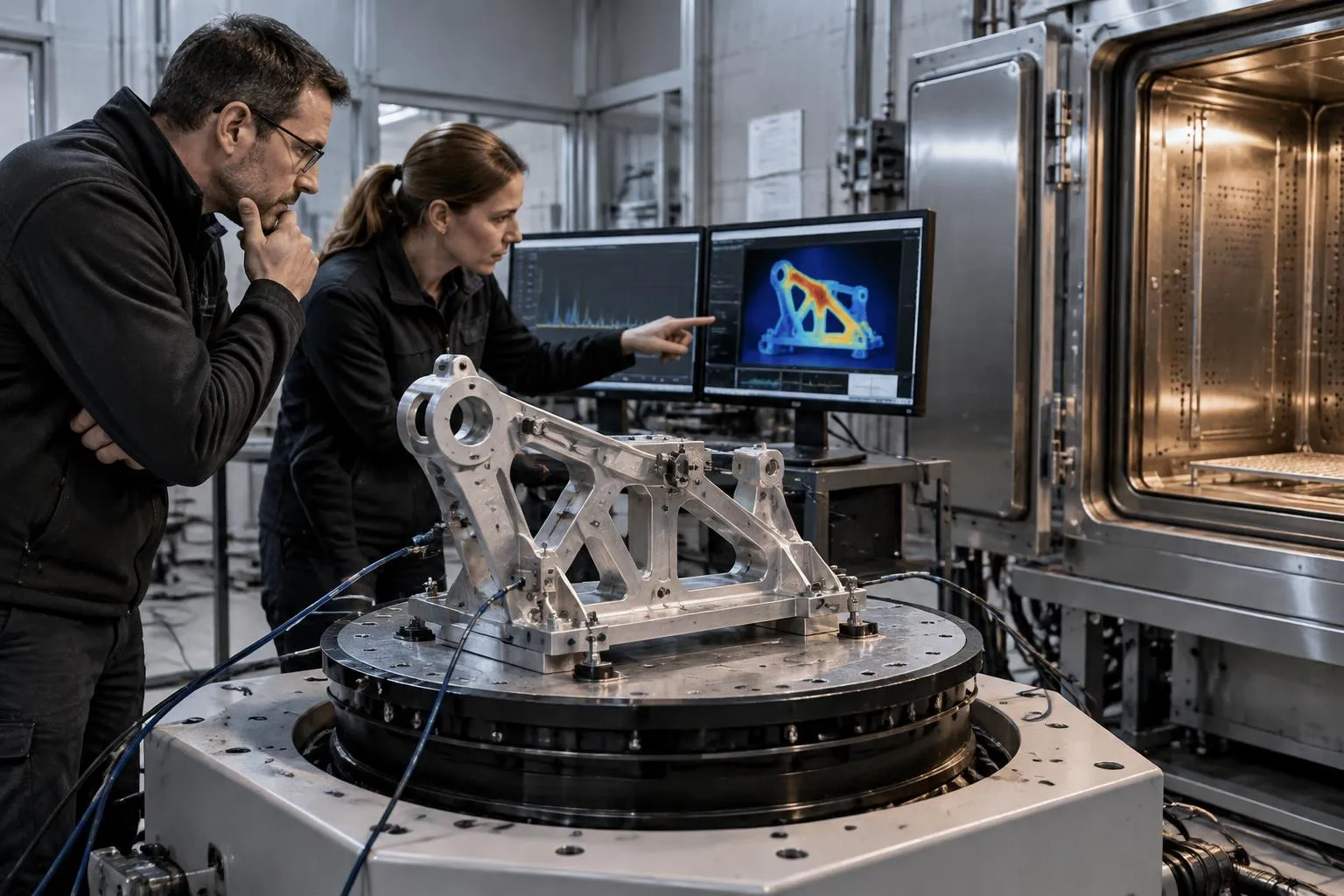
T4G Engineering contributes expertise in specialised mechanical engineering, acoustics, vibration, thermal behaviour, advanced materials and multiphysics systems.
These capabilities are important when technologies transition from laboratory conditions toward demanding industrial applications.
Engineering reliability is rarely the most glamorous part of a space programme.
Yet understanding how components behave under mechanical loads, temperature variations and integration constraints can be decisive for mission success.
The commercial potential of an invention depends not only on what it can theoretically achieve but on whether it can be developed into a reliable, testable and manufacturable solution.
VSH: An Unconventional Laboratory Beneath Switzerland
VSH – The Underground Future Lab brings an entirely different dimension to the collaboration.
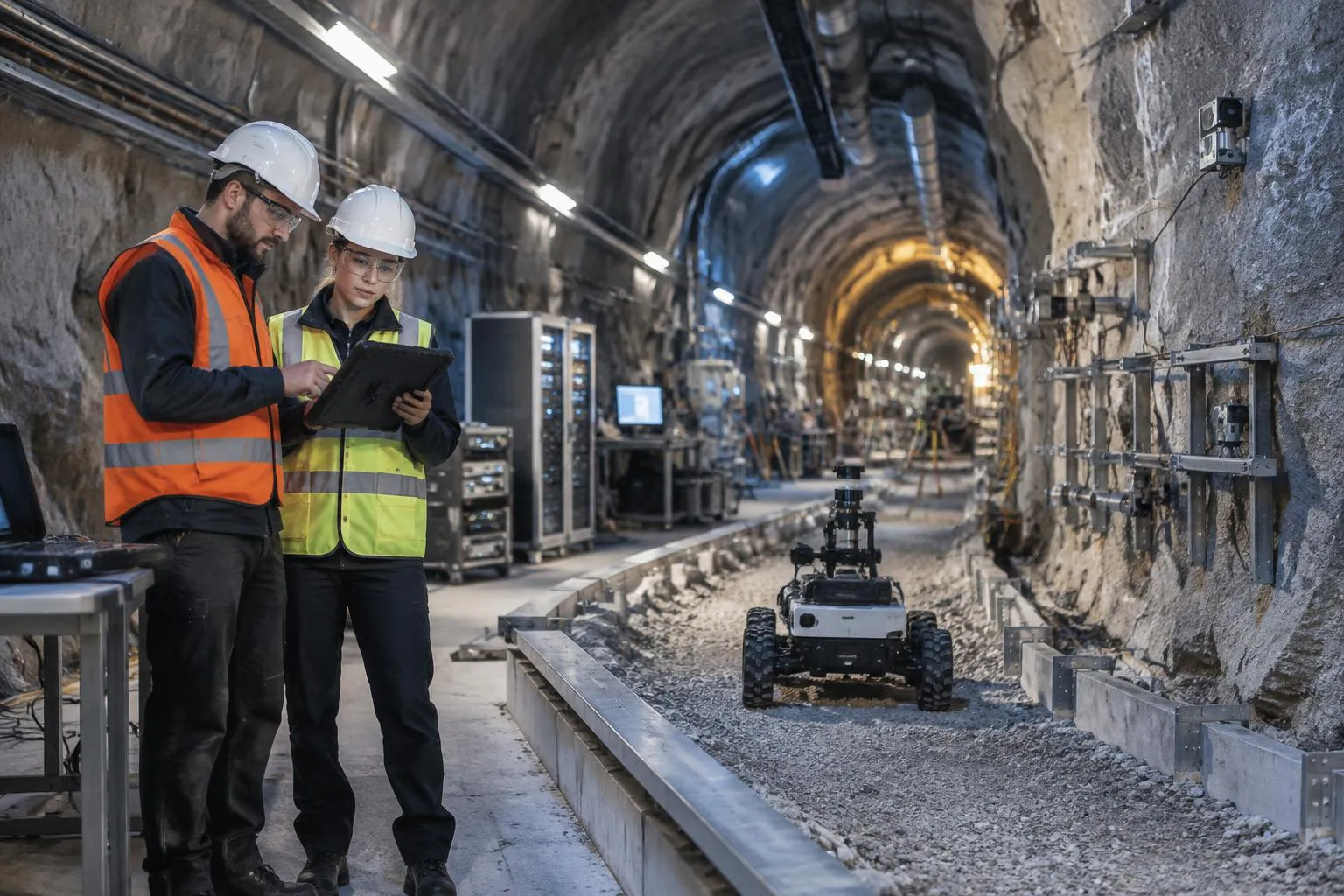
The Hagerbach Test Gallery offers approximately five kilometres of tunnels and extensive underground experimental infrastructure.
The facility supports research and development activities across challenging environments, including technologies relevant to future infrastructure, robotics and space habitat concepts.
Underground environments can offer distinctive possibilities for selected analogue experiments, controlled research installations and engineering demonstrations.
They do not reproduce microgravity and should not be presented as automatically qualified aerospace testing environments.
Nevertheless, their adaptability can be valuable when developing technologies intended to operate under unusual conditions.
In an industry increasingly interested in long-duration missions, autonomous systems and advanced infrastructure, unconventional experimental environments may provide useful opportunities for research and validation.
Technopark Luzern: Where Technology Meets Enterprise
Research infrastructure and technical expertise are only part of the innovation equation.
Companies also require access to entrepreneurial networks, industrial partners and commercial development opportunities.
Technopark Luzern provides an environment in which startups, research organisations, engineering companies and established businesses can develop connections.
Its role in the collaboration highlights an often overlooked requirement of technological progress: transforming technical capability into sustainable economic activity.
SSIP: Connecting the Capabilities
SSIP brings these complementary organisations into an international collaboration framework.
The independent Swiss association works across research, industrial technology, experimental infrastructure and international partnership development.
Its objective is to identify opportunities where the expertise of different organisations can contribute to a common technical or commercial goal.
The individual organisations remain independent.
SSIP does not replace their scientific, technical or commercial responsibilities.
Instead, it seeks to help structure collaboration around identifiable requirements and realistic development pathways.
Why Switzerland — And Why Now?
Switzerland is not Europe's largest space nation.
It does, however, possess industrial strengths that are directly relevant to an increasingly specialised space economy.
Precision engineering, advanced manufacturing, materials science, biotechnology and complex systems development are deeply embedded in its industrial landscape.
Many companies working in these sectors possess expertise with potential space applications, even when aerospace is not their primary market.
The challenge is often not to invent an entirely new technology.
It is to adapt an existing capability to demanding specifications, establish the necessary evidence and connect that capability to an international customer or programme.
This creates an opportunity for organisations able to bridge traditionally separate industries.
Through initiatives including Space BioDistrict and SSIP ATLAS, SSIP is working to make relevant capabilities more visible and explore pathways toward applied industrial projects.
Bremen provides an international setting in which to test that approach.
“The challenge is often not to invent an entirely new technology.”
From Lucerne to Orbit
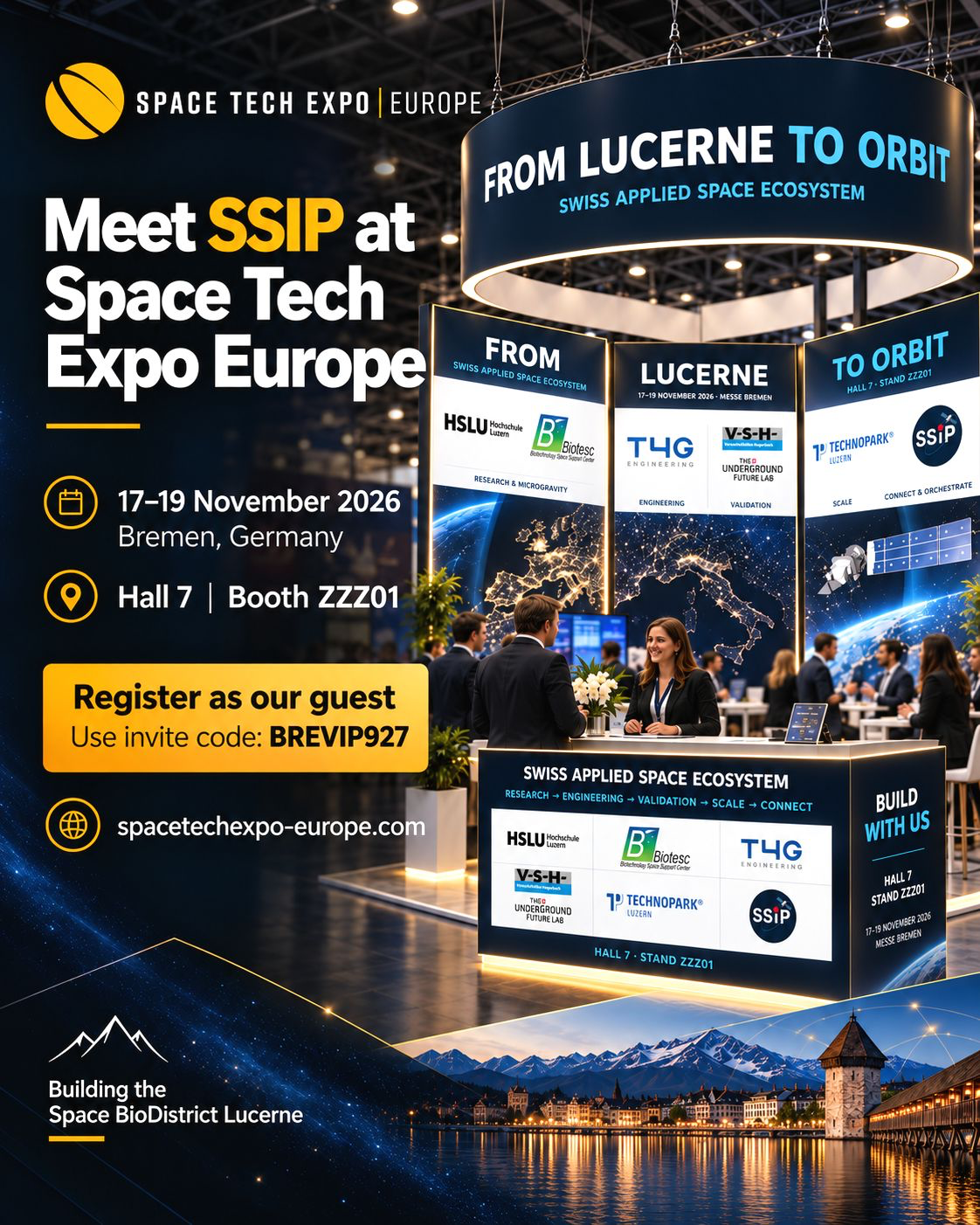
The five participating organisations will exhibit under a shared identity: FROM LUCERNE TO ORBIT.
The phrase captures an ambition extending beyond a conventional trade exhibition.
The future space economy will not be built by launch providers and satellite manufacturers alone.
It will also depend on specialised engineers, biotechnology researchers, materials developers, infrastructure operators and organisations capable of translating technological expertise into reliable industrial solutions.
A life sciences project may require biological expertise, experimental hardware, thermal management, payload integration and suitable test facilities.
An advanced engineering project may involve materials development, component design, verification and specialised manufacturing.
Connecting those capabilities around defined requirements could help reduce the distance between scientific ideas and viable industrial applications.
But the commercial test remains ahead.
An exhibition presence does not automatically create funded programmes, certified products or customer contracts.
The value of the collaboration will ultimately depend on whether technical discussions become feasibility studies, whether feasibility studies become projects and whether those projects deliver measurable results.

The Real Opportunity Begins After Bremen
For three days in November, the SSIP booth will bring together organisations representing different parts of the scientific and industrial development process.
The immediate objective is to meet prospective partners and customers, understand their technical challenges and identify areas where complementary capabilities could contribute.
The more consequential questions come afterwards.
Can those discussions develop into structured feasibility studies?
Can technical concepts become industrial pilots?
Can those pilots attract customers, investment or credible implementation partnerships?
These outcomes will determine whether the collaborative model creates lasting value.
For Europe's space industry, the broader lesson is that industrial competitiveness is not determined solely by who can reach orbit.
It also depends on who can develop, test, manufacture and deliver the technologies that make sustained space activities possible.
From laboratories in Lucerne to engineering facilities in Central Switzerland and research infrastructure beneath the mountains of eastern Switzerland, these organisations are seeking to connect expertise that might otherwise remain separated.
Their next destination is Bremen.
“Industrial competitiveness is not determined solely by who can reach orbit.”
The space industry has always looked upward for its future. This Swiss collaboration offers a compelling reason to look at what is being built on — and beneath — the ground.
Exhibition information
Space Tech Expo Europe 2026
17–19 November 2026 · Messe Bremen, Germany
Hall 7 · Startup Area · Booth ZZZ01
FROM LUCERNE TO ORBIT
Participating organisations
- Space Systems Innovation Platform (SSIP)
- HSLU / BIOTESC
- T4G Engineering
- VSH – The Underground Future Lab
- Technopark Luzern
Guest invitation code
BREVIP927
Enter this code when registering on the official exhibition website. Registration terms, availability and eligibility are set by the organiser.
Sources & context
This feature is based on SSIP’s exhibition information, VSH’s public participation announcement and the public sources listed below. All images in this article are editorial concept illustrations, not photographs of the participating organisations’ facilities or equipment. The collaboration described is prospective and does not announce funded projects, certified facilities or commercial agreements.
Was this article useful?
Your feedback helps us improve SSIP Insights.
Share it with your network.